Fuelling the New Space Era: Why India’s Space-Tech Start-ups Need Ultra Large Format Laser DED Right Now
Date: 25-08-2026 // Author: Jitender Chaurasia
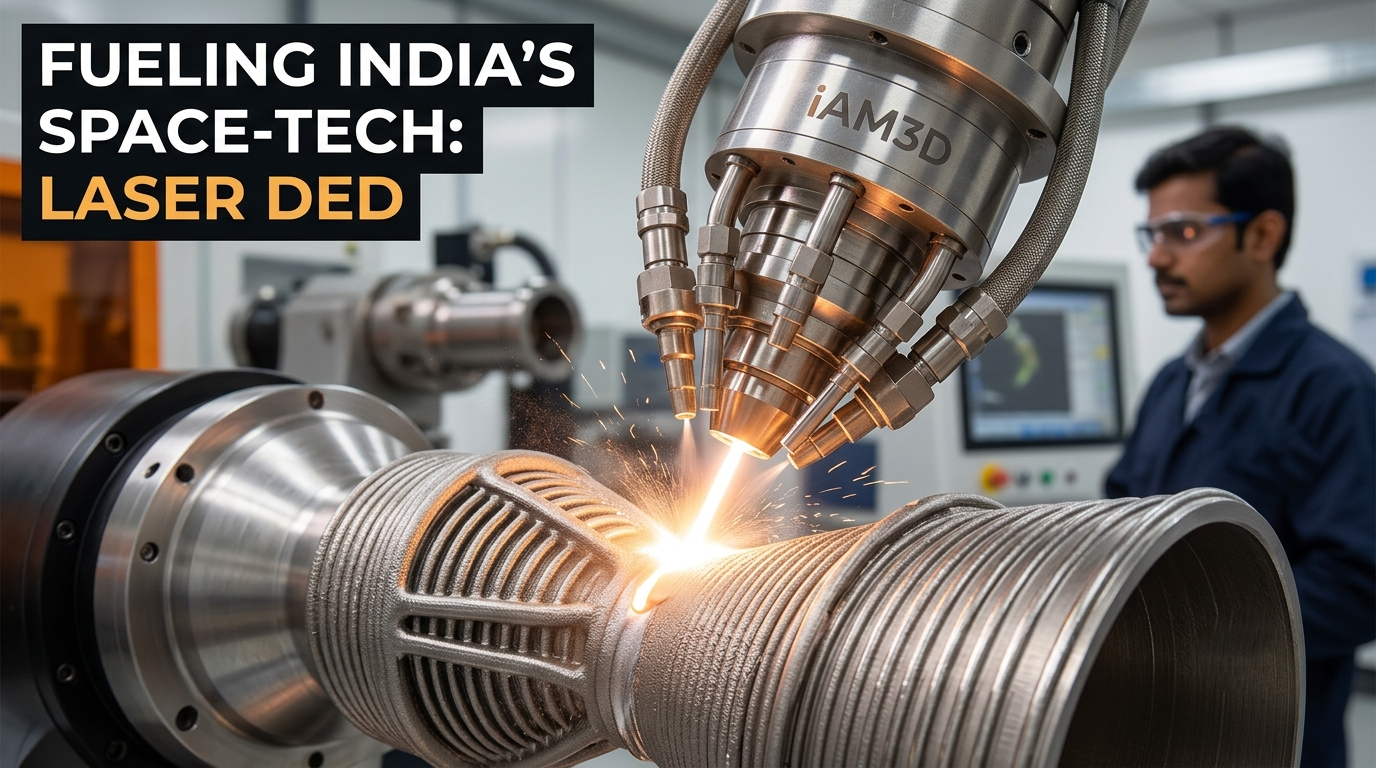
India’s space sector is undergoing a massive transformation. Led by dynamic space-tech startups building next-generation launch vehicles, satellite constellations, and lunar landers, the country is moving rapidly toward private space exploration.
However, scaling hardware in space-tech presents a major hurdle: traditional manufacturing cannot keep up with high-speed iterative engineering. High tooling costs, months-long casting lead times, and foreign material dependencies create bottlenecks that delay launch timelines.
To build fast and maintain structural integrity, India’s space ecosystem requires a production paradigm shift. That shift is Laser Directed Energy Deposition (L-DED).
The Hardware Bottleneck in Indian Space-Tech
Space hardware relies on high-performance alloys like Titanium (Ti-6Al-4V) and Inconel 718 to survive harsh flight regimes. For hardware startups, conventional manufacturing creates critical challenges:
- Long Lead Times: Custom forgings and castings for engine nozzles or turbopumps take 6 to 9 months to arrive.
- Prohibitive Material Scrap Rates: Machining complex components out of solid billet wastes up to 80–90% of expensive space-grade metal.
- Design Limitations: Traditional subtraction cannot easily execute internal cooling channels, complex manifolds, or multi-material transitions.
How Laser DED Supercharges Space Hardware Manufacturing
Unlike standard Powder Bed Fusion (PBF), which is restricted by small build volumes, modern L-DED platforms offer large-format deposition, rapid build speeds, and multi-axis flexibility.
Key L-DED Advantage Breakdown:
Space Application |
Traditional Method Challenge |
iAM3D L-DED Advantage |
|---|---|---|
Thrust Chambers & Nozzles |
Thrust Chambers & Nozzles Expensive multi-part assembly & long machining times |
Single-piece build with integrated cooling channels, cutting production by 60%+ |
Large Satellite Brackets |
Massive material waste from billet machining |
Near-net-shape deposition (Wire/Powder) saving material costs |
Turbopump Blades & Housings |
Tooling lead times of several months |
Rapid 5-axis printing of high-temp Inconel 718 components |
High-Value Part Repair |
Discarding micro-damaged, costly engine parts |
Precision cladding to repair worn surfaces without scrapping the assembly |
The Strategic Fit for iAM3D
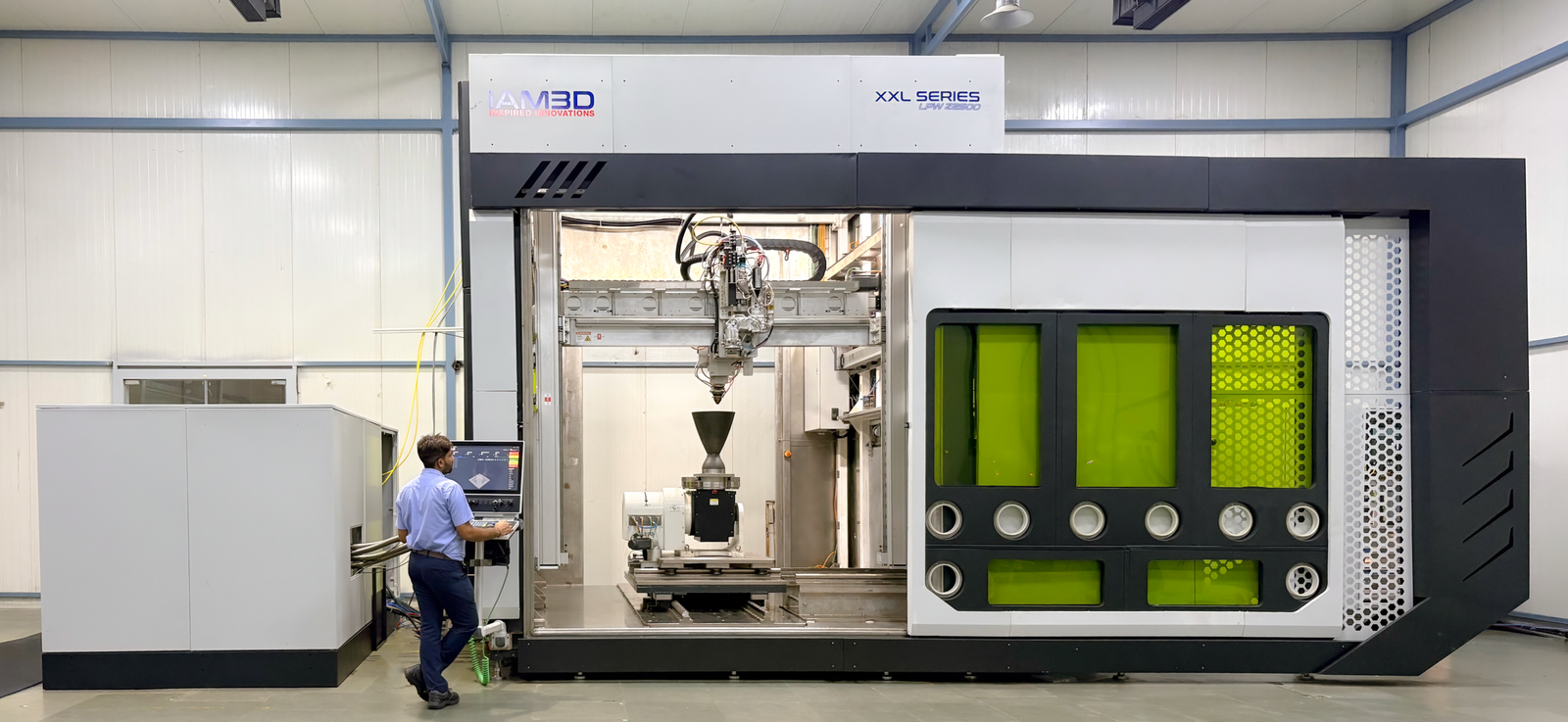
Ultra-Large Build Envelope
Ultra-Large Build Envelope , sizing 2000×2000×2500 mm enables single-piece fabrication of rocket stages and engine bodies without segmenting.
Inert Argon Atmosphere
Inert Argon Atmosphere, which reaches <10 PPM of Oxygen & Moistur, ensures optimal metallurgy for oxidation-sensitive alloys like Titanium and Tantalum.
Dual Deposition
(Wire + Powder)
Combines the fast build rates of wire-fed deposition with the geometric accuracy of powder.
Closed-Loop Control
Integrated AI/ML melt-pool monitoring ensures consistent quality throughout lengthy multi-hour builds.
Proven Materials
In space applications, structural failure is not an option. Hardware must survive localized heat flux exceeding 3,000°C, violent acoustic vibrations during launch, and extreme cryogenic environments in orbit.
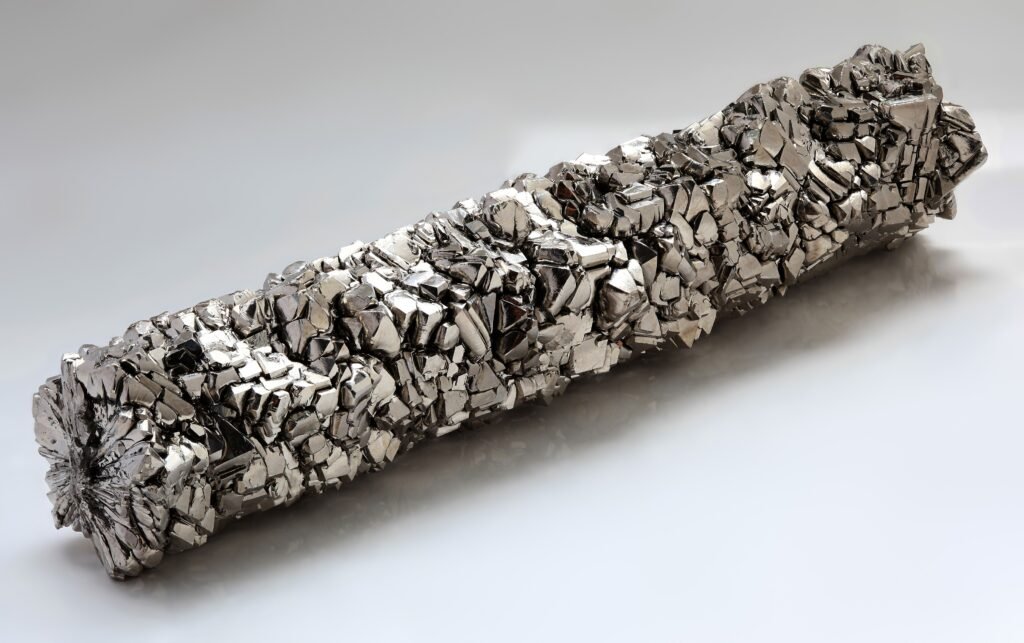
Titanium Alloys: High Strength-to-Weight Ratio
Titanium remains the material of choice for flight structures and pressurized systems due to its high yield strength, low density, and exceptional corrosion resistance.
Ti-6Al-4V (Grade 5)
The workhorse of aerospace. L-DED enables rapid fabrication of large satellite mounting rings, propellant tanks, and lander legs while maintaining near-100% theoretical density.
Ti-6Al-4V (ELI)
Extra Low Interstitial grade offering superior fracture toughness at cryogenic temperatures—ideal for liquid hydrogen and oxygen propellant delivery systems.
L-DED Advantage
Near-Net-Shape (NNS) deposition slashes the buy-to-fly ratio of titanium components from 15:1 down to 1.5:1, drastically reducing raw material costs.
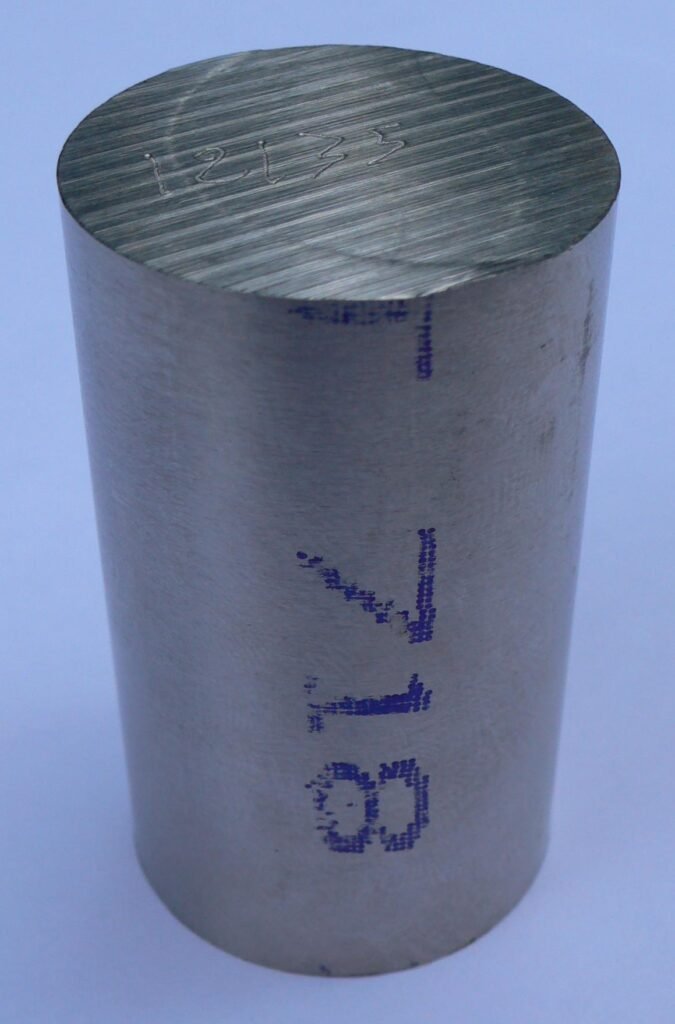
Nickel Superalloys: Extreme Thermal Resilience
Engine combustion zones require materials that maintain mechanical integrity near their melting points. L-DED provides the localized thermal control needed to process complex nickel-based superalloys without severe micro-cracking.
IN718
Excellent tensile, fatigue, and creep-rupture strength up to 700°C. Ideal for thrust chamber casings, turbopump housings, and high-pressure manifolds.
IN625
High oxidation and corrosion resistance, frequently used for complex piping, exhaust systems, and hot-gas ducts.
Haynes 230 / Inconel 939
Designed for extreme temperature regimes where thermal fatigue resistance is critical.
That's a wrap!
For India’s space startups to scale globally, relying on foreign manufacturing supply chains is no longer viable.
Deploying large-format Laser DED enables local execution of design iterations, rapid prototyping, and production under one roof—slashing development cycles from years to months.
Advanced metal additive manufacturing provides the tools necessary to move from concept to launch site faster than ever.
Is your team ready to scale your space hardware manufacturing?
Explore iAM3D’s Large-Format L-DED Platforms or connect with our engineering team to discuss your next build.